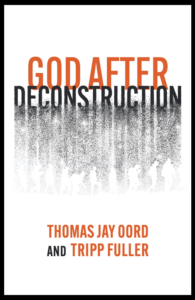
Once again, a version of the 'science v religion' debate ... when will these guys realise the significant contributions 'religion' has made in the field of 'science', and vice versa?
+++
1. Religion should abandon quests for certainty but, like science, make inferences to the best explanation.
1: Our lived experience teaches us we can be certain about certain things.
2: Science – based on its own a priori axioms – teach us we can be certain about certain things that lie beyond the scope of everyday experience.
3 : Similarly, religion – based on its own a priori axioms – teaches us we can be certain about certain things.
This means, in part, that religions should reject the idea of an inerrant scripture.
Er, most do? Catholicism, Orthodoxy, etc.
It should also reject the idea that the Pope, church, religious leader, or religious group is inerrant.
Two-parter here:
1: The pope, etc, is not inerrant, and this only demonstrates either utter ignorance of what the doctrine of inerrancy is actually about,
or (probably more likely) its populist fluff for the benefit of the bloggerati, on whom I suppose he depends for his continuing popularity.
Taken at face value, and responding in kind, this means that no-one has any right to declare anything to be 'true'.
And it should deny that any experience gives us inerrant access to God’s mind. (For more reasons to reject certainty, see God After Deconstruction.)
Again, I don't know of any Christian denomination who makes such a claim.
2. Religions should avoid seeking axiomatic absolutes. It should incorporate experiential data as evidence to support or undermine religious beliefs.
The problem here is the question of credibility. and thereby this thesis falls apart.
Religions were built on experiential data. The Bible is a record of experiential data.
Point 2 is a nonsense statement.
3. Religions should affirm the deep empirical reality of free will as an experiential nonnegotiable.
I rather think they do?
Some religious ...
Anecdotal argument is a logical fallacy.
Religions should also affirm other experiential non-negotiables...
While on the other hand science affirms our experiential fallibility, so you've rather painted yourself into a corner there.
... reject solipsism, radical skepticism ... reject reductive materialism, extreme relativism ... reject constant conjunction ... reject nihilism, dysteleology)
My, my ... we are rather being dogmatic about what we should reject and what we can accept?
And this is based on what, the inerrancy of your own experience?
4. Religion should consider God a necessary and efficient cause but not a sufficient cause in creation.
We should reject the deistic idea that God exists but never interacts.
OK, so you reject Deism, but I see not empirical, infallibly experiential, scientific basis for making that claim, so it doesn't really belong on this list.
We should reject the supernatural view, which says God occasionally intervenes and controls. We should reject metaphysical atheism too. Religions should embrace the idea that God is one uncontrolling cause among other causes.
Good Lord, you do seem fond of rejecting everything other than your own viewpoint.
5. Religions should stop referring to “human nature,” as if it were an abstract essence.
See my reply above.
6. Religions should give up binary thinking about gender and sexuality.
Ditto. although for scientific reasons, I tend to agree.
7. Religion should affirm big bang cosmology but reject creatio ex nihilo (creation from nothing).
Ah, haha. so, like inerrancy, you don't understand the arguments for creatio ex nihilo either. Nor the mythopeic nature of biblical discourse.
Q: Why is there anything at all?
Q: If God did not bring the primordial soup into existence, who, or what, did?
There is no biblical support for creatio ex nihilo. And the big bang doesn’t require creatio ex nihilo.
There is support, just not an explicit literal statement of.
The Big Bang treats with everything after the bang, not before, that's speculation.
Besides, creatio ex nihilo assumes God has the kind of power that makes the problem of evil insoluble.
No it doesn't. Logical fallacy.
Religious believers should say God always creates in relation to what God previously created, because that’s the way of love.
What did God previously create, in relation to this whole thesis? I'm not even sure this statement makes sense.
There is also the argument that if God is the Creator, then to create the same thing twice is a lesser good in relation to creating two different things. In the same way, if evolution stuck to one thing only, life would be ... different. But evolution doesn't.
8. Religions should accept the implications of evolution and give up language that suggests a return to a pristine past (e.g., pre-fall, Garden of Eden).
Look at Maximus the Confessor, 6th century CE, and try and get your head round broader concepts.
9. Religions should affirm that all complex creatures have the ability to love, and that being made in the image of God is not confined to humans.
OK.
I define love as acting intentionally, in relational response to God and others, to promote overall well-being.
Do you? That's very sad, poor, impoverished idea of love
10. Religions (and sciences) should be open to the possibility of mind in all creatures, from the simplest to the most complex, and that God has mental and material dimensions.
Yep, we always were, I think it was science that decided otherwise.
Instead of thinking creatures and creation are vacuous, religions (and science) ought to embrace panpsychism, or what David Ray Griffin called “panexperientialism.” My preferred label is “mental-material monism.”
Yes, why settle for an established term when you can come up with one that says the same thing, and claim the credit for it?
11. Religions (and science) should embrace the intrinsic value of all creation not just of humans.
Again, we did, until science led us to thinking that 'nature' was a wanton creature to be tamed and used.
+++
I'm sorry, but the more I went through this, the more I grew to dislike Mr Oord. Possibly not his fault.
Seems he was a member of the "Church of the Nazarenes", one of Wil, '5k' Christian denominations, but got thrown out of that. Can't say more than that as I've never come across his name in my researches.